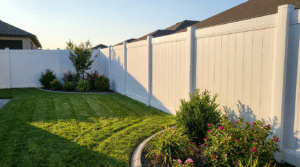
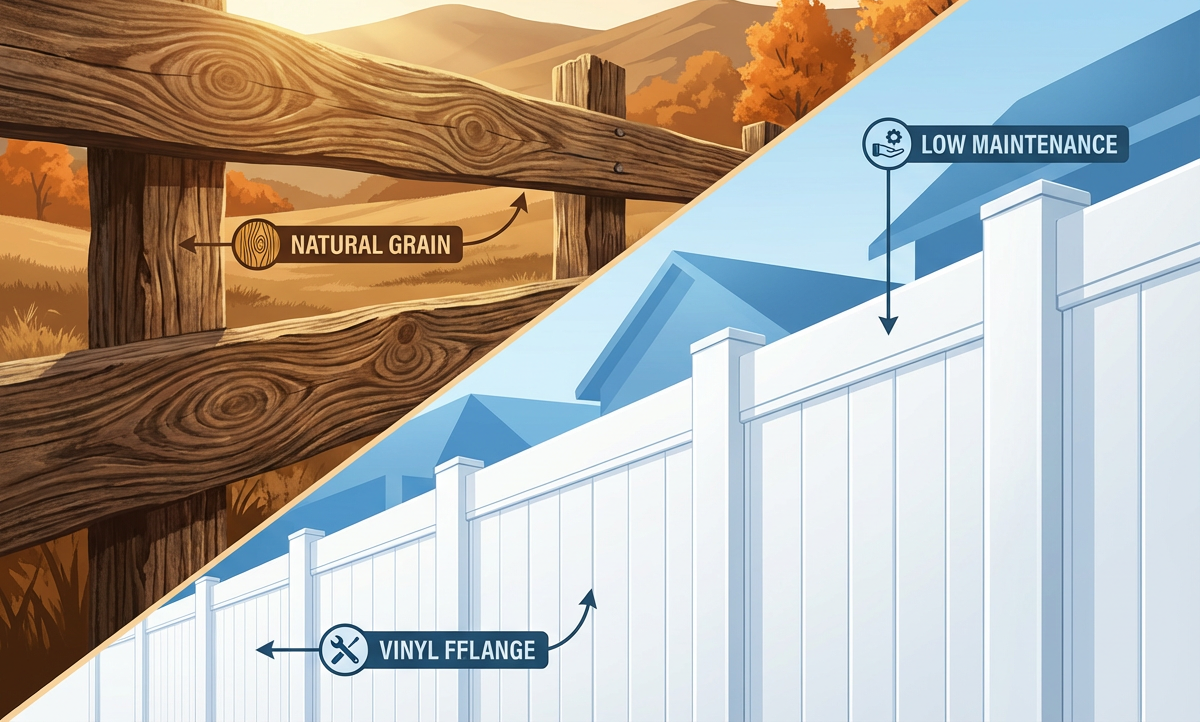

Choosing between wood and vinyl? You’re not alone. Most people stand in their yard holding samples like they’re deciding on a tattoo. Wood has that warmth—the kind you can’t fake. Vinyl just sits there promising you’ll never have to think about it again.
Here’s what actually matters.
Not sure whether to repair or replace? 5 signs it’s time to replace your fence
Understanding Your Needs: What to Consider Before
Choosing a Fence
Dogs dig. Kids climb. That neighbor with the binoculars exists. Maybe you’re renting the place out in two years, maybe you’re here for life.
Write it down. Your real situation—not the Pinterest version—decides everything.
Budget: Initial Investment vs. Long-Term Costs
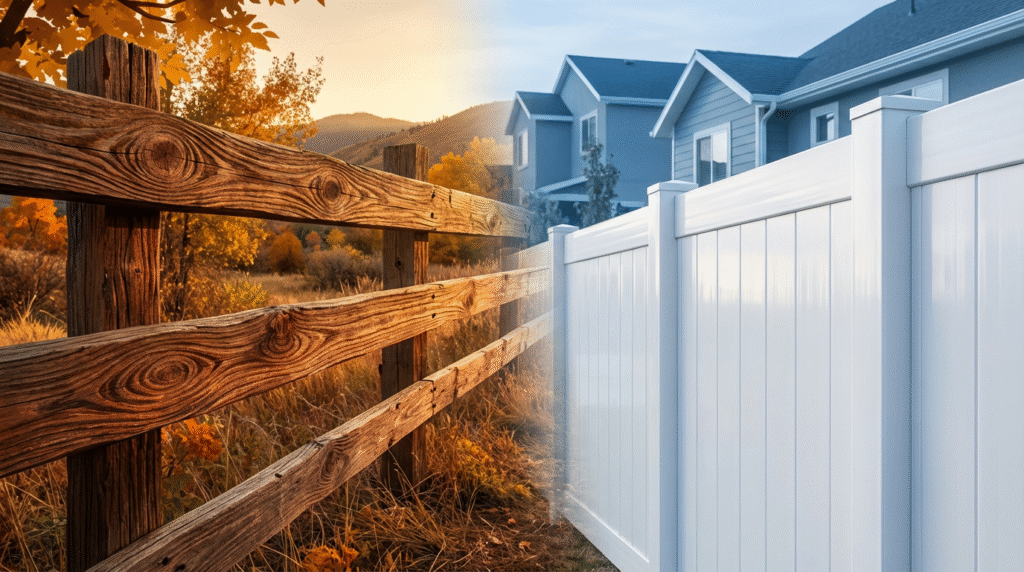
Wood wins if you need a fence yesterday and your bank account agrees. Two hundred feet installed runs you $3,000 to $6,000, give or take. Depends on the wood, the height, whether your yard’s flat or looks like a skate park.
Vinyl stings harder upfront. We’re talking $5,000 to $10,000 for that same stretch. But here’s the thing—wood starts sending you bills. Every couple years you’re buying stain, spending a Saturday with a brush, maybe $300 to $500 a pop. Do that for twenty years and suddenly vinyl’s looking smarter. The math flips around year eight.
Durability and Longevity: How Long Will Your Fence Last?
Good cedar? Twenty, maybe thirty years if you treat it right.
Cedar may last for 15-30 years, spruce may last for 4-7 years and pine may last for 5-12 years. Treated wood, however, increases this longevity. Buzz Fence
Cheap pine waves goodbye around year ten if you ignore it. Vinyl just stands there for thirty, forty years. Longer if you bought the thick stuff instead of the flimsy hollow panels that crack first winter.
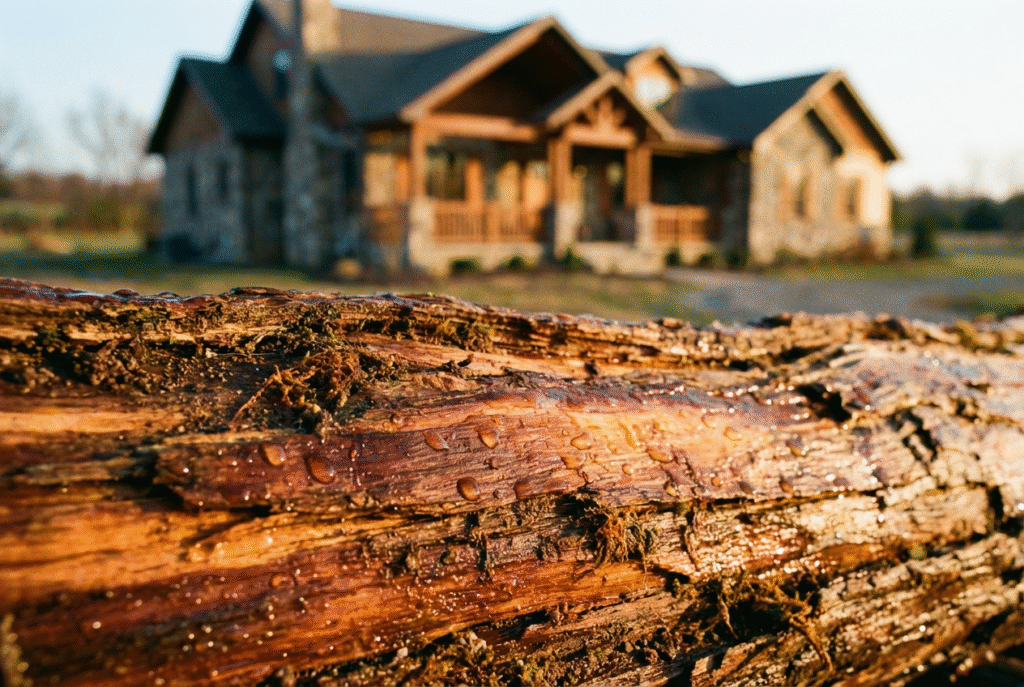
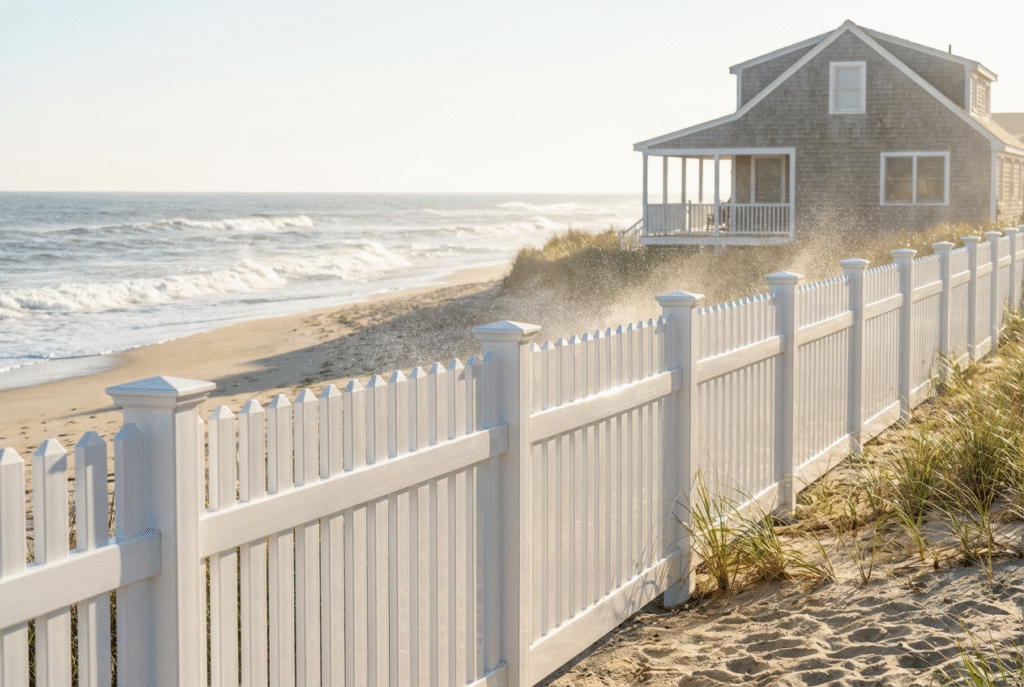
Salt air murders wood. I’ve seen coastal fences that looked elderly at twelve. Inland with religious sealing, cedar fights hard. Vinyl doesn’t care where you live.
Aesthetics and Style: Matching Your Home’s Look
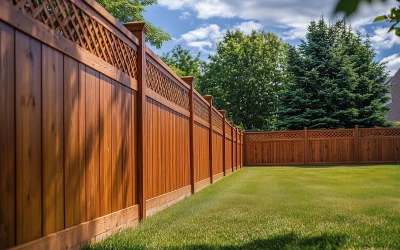
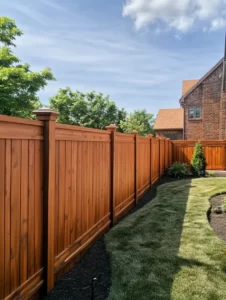
Nothing touches fresh cedar in morning light. Nothing. That grain, the way it smells when you cut it, the fact that you can stain it dark this year and change your mind in five. You can paint it teal if your HOA’s asleep. You’re not stuck.
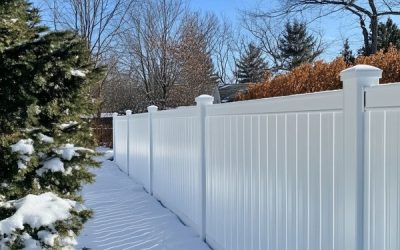
Vinyl arrives in white, tan, gray. Maybe one other color if the factory felt adventurous. The textured stuff fools most people from the street, but get close and you know. Still, it looks the same in year fifteen as day one.
No fading, no peeling, no surprise weathering to silver-gray you didn’t ask for.
Privacy and Security: What Level Do You Need?
Six-foot solid panels work either way.
Wood gives splinters to climbers—natural deterrent right there. Vinyl’s slippery smooth, harder to grip. Stick steel posts inside the panels and you’ve got a fortress that looks friendly.
Local Regulations and HOA Rules
Some HOAs care more about fence color than air quality. Check before you fall in love with black vinyl or that reclaimed barn wood idea. I’ve watched grown adults nearly cry over rejection letters.
Get your permits first. Just do it.
The Classic Choice: Advantages and Disadvantages of Wood Fences
Old neighborhoods still swear by wood. There’s history there, plus it smells like childhood and sawdust.
Pros of Wood Fences: Natural Beauty, Versatility, Cost-Effectiveness
Real grain beats fake grain every time. You can see the years in there, the growth rings, the character. Synthetic materials try, but they’re actors reading lines.
Cut it however you want. Custom heights, decorative caps, that weird angle where your property line does something stupid—wood bends to your will. One board cracks? Swap it. Ten-minute fix.
Starts 30-50% cheaper than vinyl. That matters when you’re fencing 200 feet and the quote makes you blink twice.
Cons of Wood Fences: Maintenance, Durability, Pests
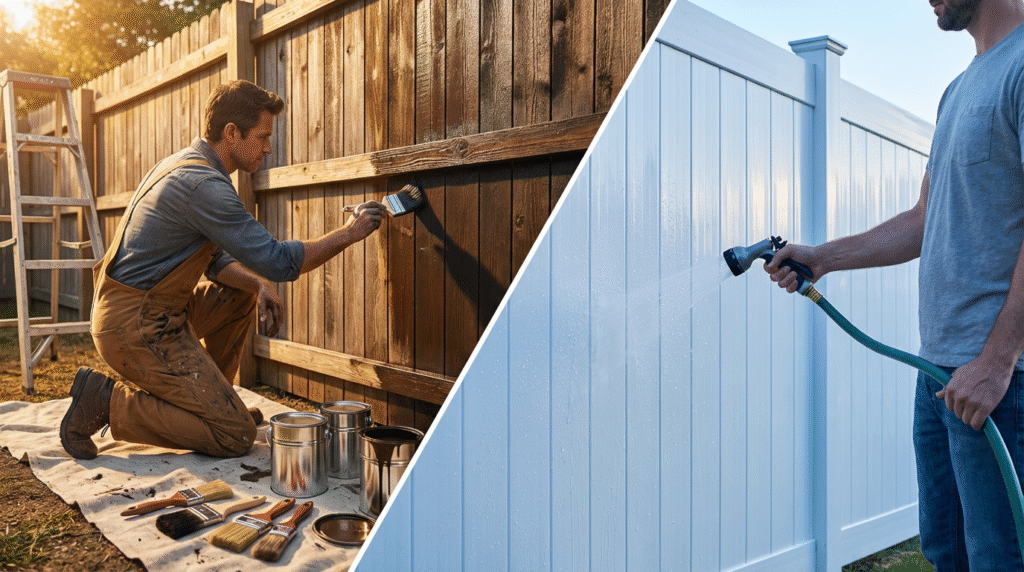
Every two, three years you’re out there with a sprayer. Skip a year and rot moves in like a bad roommate you can’t evict.
Termites throw parties in untreated pine. Even treated wood attracts them eventually—they’re persistent like that. Humidity makes boards twist. Rain promotes rot. Sun cracks and fades. Wood wants attention.
Fifteen to twenty years and you’re replacing the whole thing. Maybe sooner if you live somewhere angry.
Types of Wood for Fencing (Cedar, Pine, Redwood)
Cedar has built-in bug spray—natural oils that pests hate. Mid-to-high price, but you get twenty to thirty years out of it. Worth it.
Redwood costs a kidney but laughs at decay. Beautiful color too. If you can find it and afford it, you’re set for 25-30 years minimum.
Pressure-treated pine is the sensible middle child. Chemicals give it backbone against rot and bugs. Still needs sealing. Ten to fifteen years with effort.
Pro move: Seal every cut end before it goes in the ground. Those open pores drink water like college freshmen at happy hour. Rot starts from the inside.
The Modern Solution: Advantages and Disadvantages of Vinyl Fences
New subdivisions look like vinyl showrooms for good reason. It works.
Pros of Vinyl Fences: Low Maintenance, High Durability, Variety of Styles
Hose it twice a year. Done. No paint, no stain, no weekend projects you keep postponing. Warranties actually mean something—20, 30 years, sometimes lifetime.
Doesn’t rot, bugs ignore it, weather just bounces off. Color stays put. What you install is what you see twenty years later.
Coastal homes? Vinyl wins before you finish your coffee.
Cons of Vinyl Fences: Higher Upfront Cost, Repair Challenges, Less Natural Look
You’re paying 40-70% more upfront. That hurts.
Break one panel and you’re replacing the whole section, not just one piece. Repairs cost more than wood’s simple board swap. Can’t paint it—well, you can, but your warranty walks out the door and it might peel anyway when the material expands and contracts.
Cheap hollow vinyl cracks in serious cold, warps in brutal heat. You get what you pay for. Buy the thick solid-core stuff or regret it first winter.
Up close it’s plastic. Improved, textured, convincing plastic—but plastic.
Types of Vinyl Fences (PVC, Composite)
Pure PVC for privacy. Solid construction, best durability, won’t crack if you bought quality.
Composite mixes vinyl with wood fibers. Trying to have it both ways—vinyl’s durability, wood’s appearance. Works okay. Slightly better insulation.
Look for solid-core, UV inhibitors, thick walls (0.15 inches minimum). That’s how you spot quality.
Side-by-Side Comparison: Wood vs. Vinyl Fence
|
Factor |
Wood Fence |
Vinyl Fence |
|
Upfront Cost (200 ft) |
$3,000-$6,000 |
$5,000-$10,000 |
|
Annual Maintenance |
$200-$500 |
~$50 |
|
Lifespan |
15-25 years |
30-50 years |
|
Repair Ease |
Swap a board |
Replace whole panel |
|
Eco Impact |
Renewable (FSC certified) |
Recyclable but petroleum-based |
|
Climate Fit |
Inland, with care |
Everywhere, especially coast |
|
Customization |
Unlimited |
Factory options only |
Cost Comparison: A Detailed Breakdown
Wood saves you two to four grand today. Then it quietly invoices you for twenty years.
Real numbers over twenty years:
Wood (200 feet):
- Install: $4,500
- Maintenance: $400/year × 20 = $8,000
- Total: $12,500
Vinyl (200 feet):
- Install: $7,500
- Maintenance: $50/year × 20 = $1,000
- Total: $8,500
Vinyl saves you roughly $4,000. Break-even hits around year eight. After that, you’re ahead.
Maintenance Comparison: Time and Money Saved
Wood demands: Eight to ten hours every year. Cleaning, staining, fixing boards that decided to quit. $300-500 in materials. Or hire someone for $500-800 every few years. Plus random board replacements.
Vinyl asks for: Thirty minutes with a hose. Maybe an hour if you’re thorough. Fifty bucks tops. No contractor needed.
You save 160-200 hours over twenty years. That’s a lot of Saturdays.
Durability and Lifespan: Which Lasts Longer?
Coast? Vinyl dominates. Salt air eats wood alive. Even premium cedar with constant sealing struggles past twenty years near the ocean. Vinyl doesn’t notice.
Inland with religious maintenance—sealing every 2-3 years, no excuses—cedar can almost keep up. But that’s work. Consistent, ongoing work.
Reality check:
- Ignored wood: 5-10 years
- Babied wood: 15-25 years
- Quality vinyl: 30-50 years
Environmental Impact: Sustainability Factors
Wood: Renewable if you buy FSC-certified. Biodegrades eventually. Lower manufacturing energy. But pressure-treated lumber uses chemicals that make environmentalists wince.
Vinyl: Petroleum product. Takes more energy to manufacture. Technically recyclable though infrastructure’s spotty. But you replace it once in thirty to fifty years versus every fifteen for wood.
Lifecycle analysis? Vinyl might actually win despite being plastic. Depends who’s doing the math.
North Dakota fence guide: Best materials for extreme cold and wind
Installation: DIY Potential vs. Professional Help
Wood forgives mistakes. Post slightly off? Board covers it. Measurement wrong? Cut another one. Weekend warriors can handle this with standard tools.
Vinyl punishes errors. Everything needs to be perfect—posts plumb, measurements precise, panels fitting exact tolerances. DIY installation voids warranties. Specialized tools help. Mistakes cost real money to fix.
Get professionals for vinyl unless you enjoy expensive lessons.
Read more: Fence installation timeline (permits, digging, concrete cure)
Making Your Decision: When to Choose Wood, When to Choose Vinyl
Ideal Scenarios for a Wood Fence
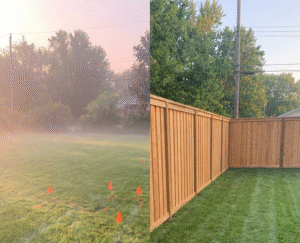
Pick wood when you’ve got a Craftsman house that deserves real materials. When budget’s tight now but you like weekend projects. When you actually enjoy working with your hands and the smell of sawdust isn’t punishment.
When you want unlimited color options and the freedom to change your mind later. When you’re inland where weather’s reasonable and you’re committed to the maintenance schedule.
Ideal Scenarios for a Vinyl Fence
Choose vinyl if busy is your default setting. Rental property that needs to coast on autopilot. Coastal location where salt air makes wood cry. Temperature swings that would torture other materials.
When long-term savings matter more than initial sticker shock. When you want to install it, look at it, forget about it for twenty years except for occasional washing.
When you want a fence, not a hobby.
Soil tip: Test pH before burying wood posts. Acidic soil (under 6.0) accelerates decay. Might need concrete footings or just go vinyl.
Conclusion
Wood brings soul. Grain patterns, customization freedom, that authentic feel you can’t fake. Vinyl brings sanity—minimal maintenance, exceptional durability, long-term savings that add up quietly.
Both work. Both matter. Neither transforms your property value magically.
Return on Investment
Fences don’t make you rich. They make your property functional, private, secure. When you sell, expect to recover 30-70% of installation costs.
According to Angi, the average return on investment (ROI) for installing a fence usually ranges between 30% and 70% of the installation cost. This means that if you spend $3,200 on a fence, you might expect to see around $950 to $2,400 added to your home’s appraised value. Redfin
Not amazing returns, but good fences help homes sell faster. Better offers sometimes follow.
The right choice fits your actual life. Your budget, your time, your climate, what you care about aesthetically, whether you’re here for five years or fifty.
Get multiple quotes. Ask contractors to show you finished projects nearby. Good ones discuss your specific needs instead of pushing whatever they installed last week.
Read also: What to expect during your fence installation day
Frequently Asked Questions
Yes. Initial cost hurts more—maybe $2,000-4,000 extra. Then minimal maintenance saves you $3,000-5,000 over twenty years compared to wood's constant staining, sealing, replacing.
Technically. Special plastic-bonding paint exists. But your warranty disappears instantly and it might peel when the material expands and contracts. Don't.
Western red cedar, no contest. Natural oils and tannins fight decay. Redwood performs similarly but costs more and you can't find it everywhere.
Cheap hollow stuff? Absolutely. Quality solid-core with proper UV inhibitors and impact modifiers? Laughs at twenty below. Pay for quality or pay twice.
Be honest about your priorities. Love natural materials and have maintenance time? Wood. Want to install and forget? Vinyl. Calculate twenty-year costs including your time. That usually settles it.